In the last couple of years, there has not been a single video on my YouTube channel that didn’t have the comment section (and social media sites, naturally) littered with responses shaming me for using AI artwork. Sometimes they’re personalized messages of disappointment, other times they’re angry messages accusing me of hating artists.
Regardless of the content, if an animation or image is in the video, the AI Slop Police will bring their charges within minutes of a video being uploaded.
But amusingly, I posted a video teaser on Instagram and immediately got AI charged for using a…font.
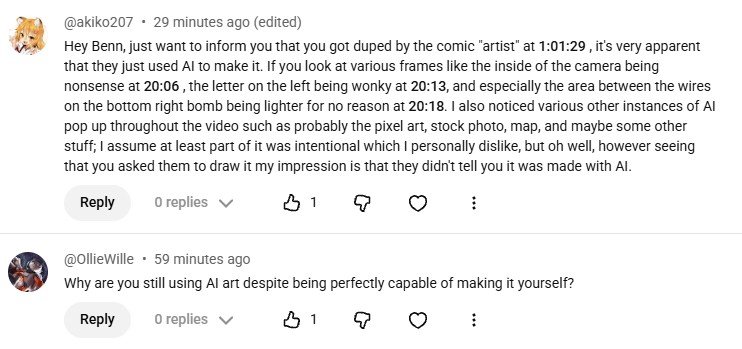
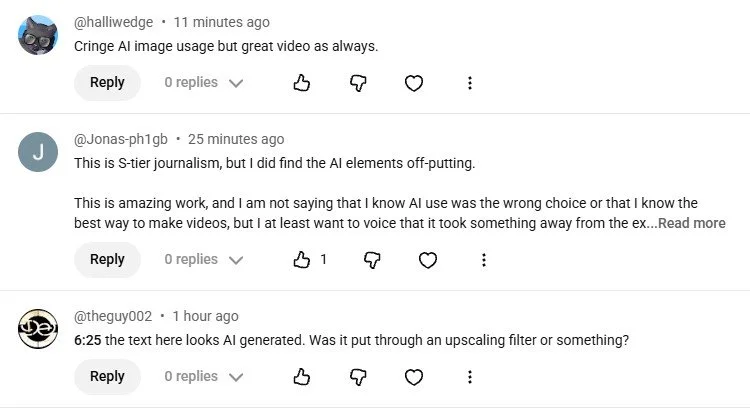
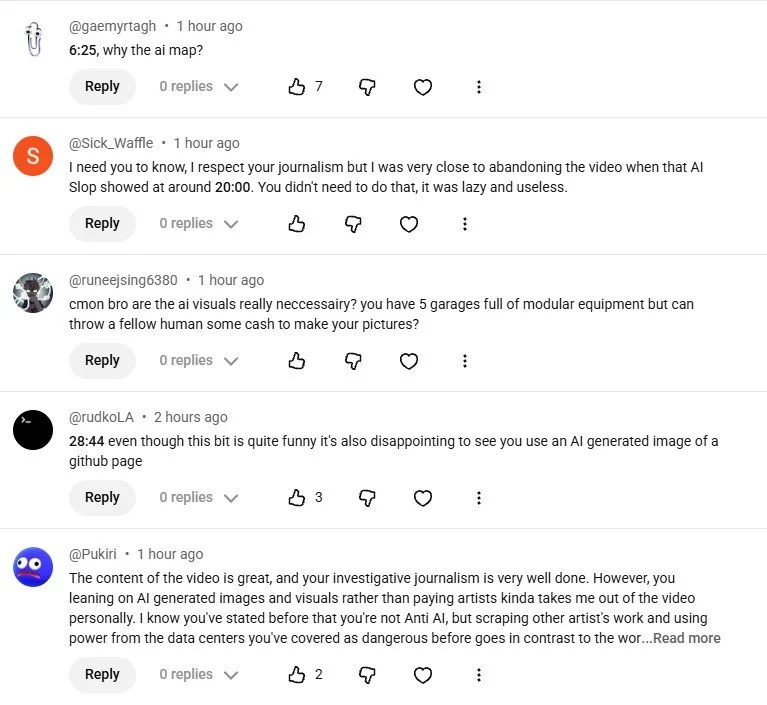
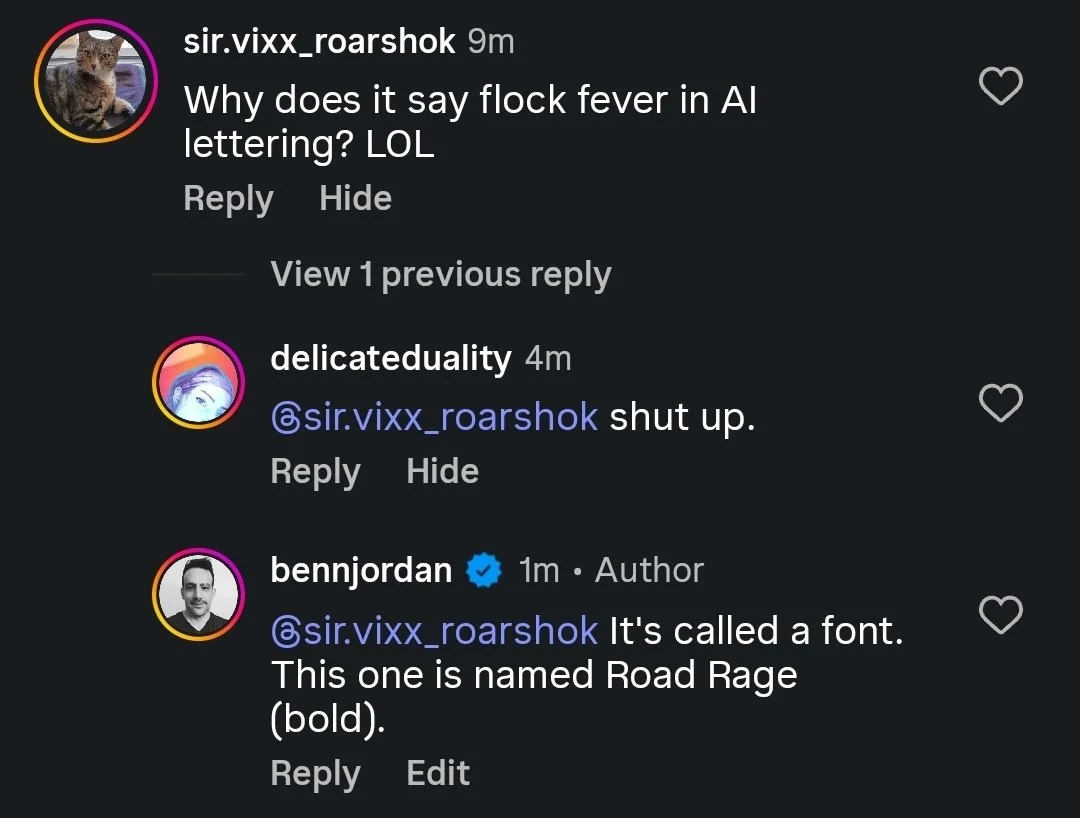
You know where this is headed: I can’t remember an instance where I intentionally used AI artwork in a video of mine.
I say *intentionally because apparently a couple of licensed PNG files slipped through the cracks, and my AI artwork detection skills weren’t up to par.
Why I don’t Prefer To use generative AI in my videos
I truly believe that if generative AI could help me improve the explanation of a complex situation or topic to a viewer, the value of education supersedes the stigma of prior training data or electricity usage. It’s just that generative AI doesn’t save me time. I’m way too picky about things like animation timing, motion curves, and viewer focus. If I want my viewer to pay attention to a specific asset in an animation, I’ll bring it in slower, vibrate it, or grade the color with bolder contrast.
I think this is just part of the job, and it’s easier to draw envelopes and move color wheels than it is to describe what I want to an LLM in English and cross my fingers that it’ll get it right within 10 tries.
But my reason for this post is not to complain about people being lame on the internet.
Well, it kind of is, but my primary objective here is to:
A. Explain that Steve (comic book illustrator who I hired, and I am unfortunately not fully crediting as people are claiming he is using AI 🙄, which may harm his reputation) and Cameron/Venus Theory (cinematographer) are real, talented, hard working, and professional artists who were hired to help with this last video. And shouting “slop” at their hard work is far more hostile to artists than even the most exploitive AI model.
B. Show you a bit of how it was done, as it was fun and inspiring.
911 Call To Comic Animation workflow
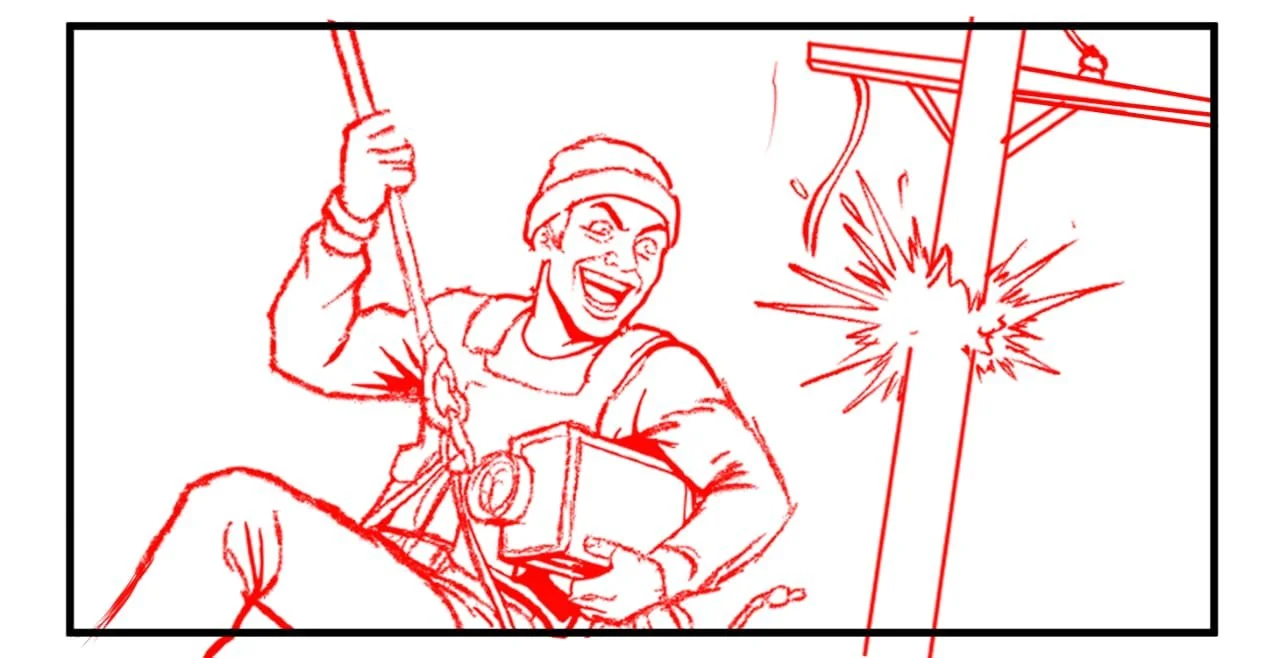
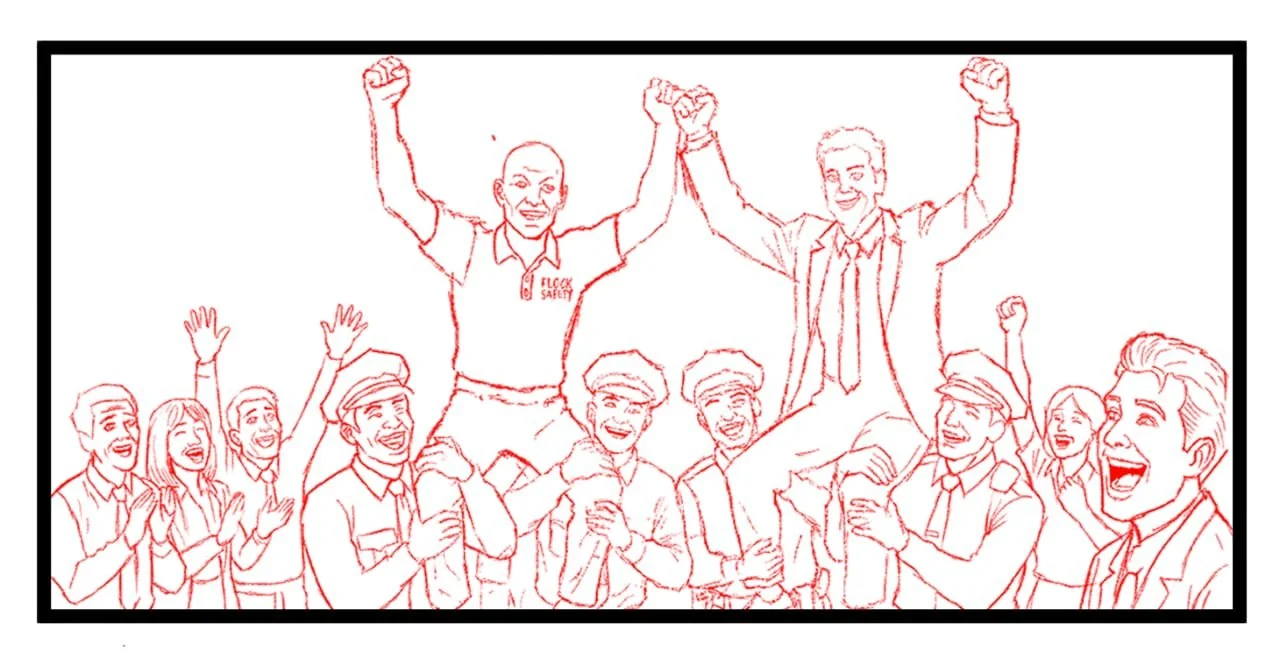
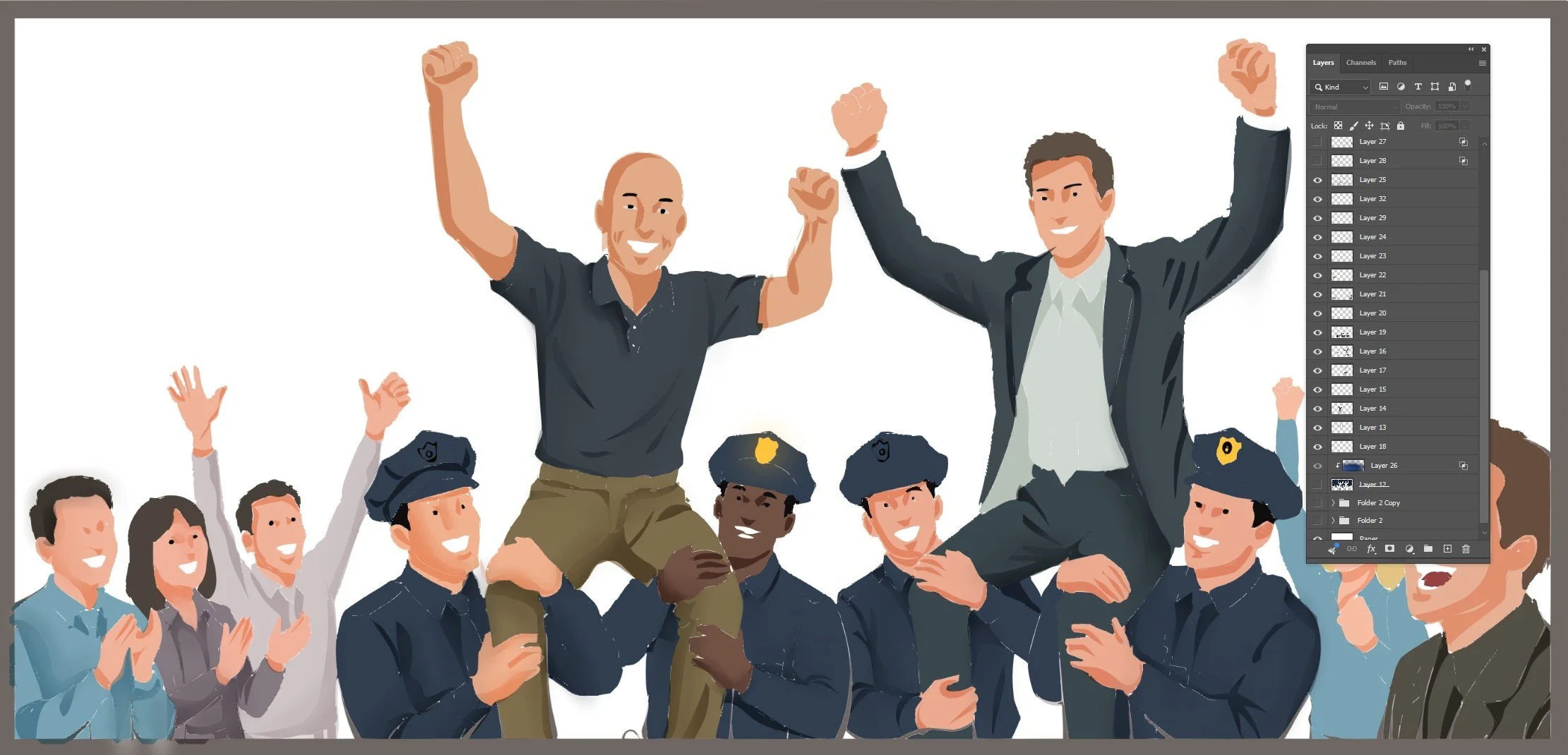

In reference to this bit.
I started out by pulling the audio from the police body cam footage, cleaning up the audio, and isolated the segment where the Flock employee describes his version of events of what had happened.
I then blindly sent this recording to Steve, and asked him to illustrate it as if it were a page out of an action comic. Oddly enough, Steve, living across the ocean, didn’t really know what a Flock camera looked like. This was perfect for my intent of having the scene illustrated with absolutely no context, but it also required some guidance.
I did some bits on my end with coloring and details, then isolated the foreground and backgrounds into separate exported layers. From there, I could create a 3D scene with a camera that focused like a real one does to create a parallax GTA-style blurring and panning effect. I rendered this and put it through Dehancer for a mild film grain effect, added some burned in subtitles, and that’s what you see in the video.
Improvised LeGo Stage
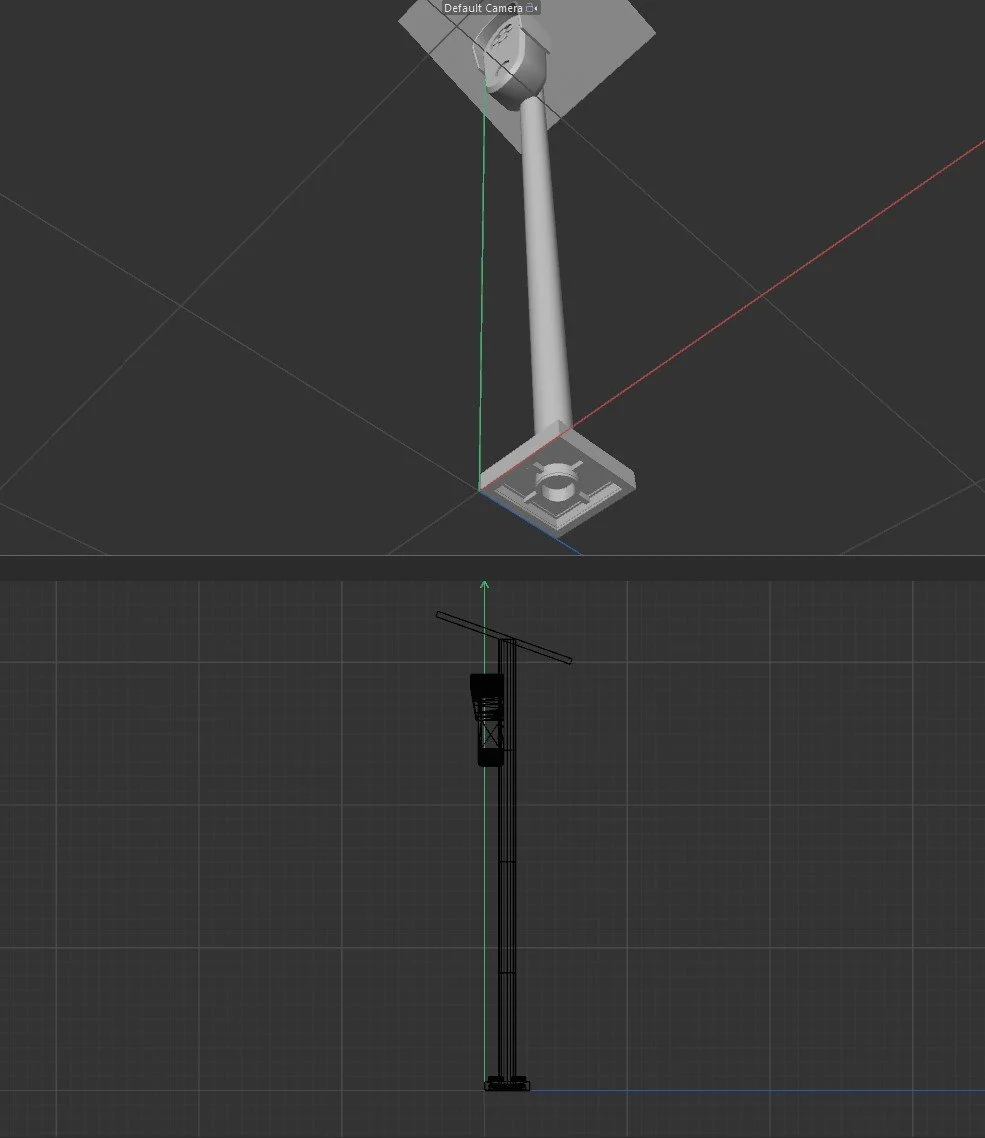
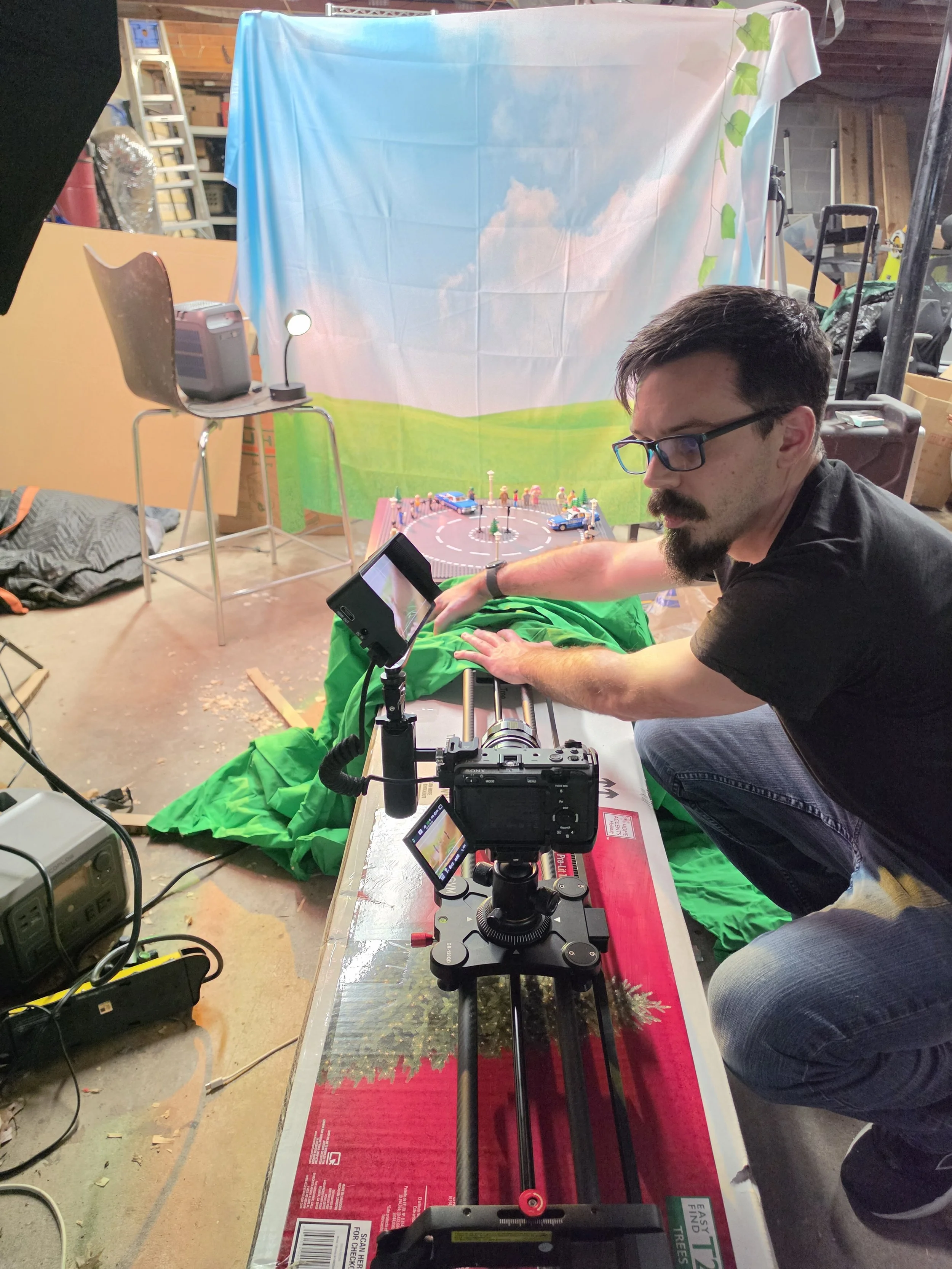
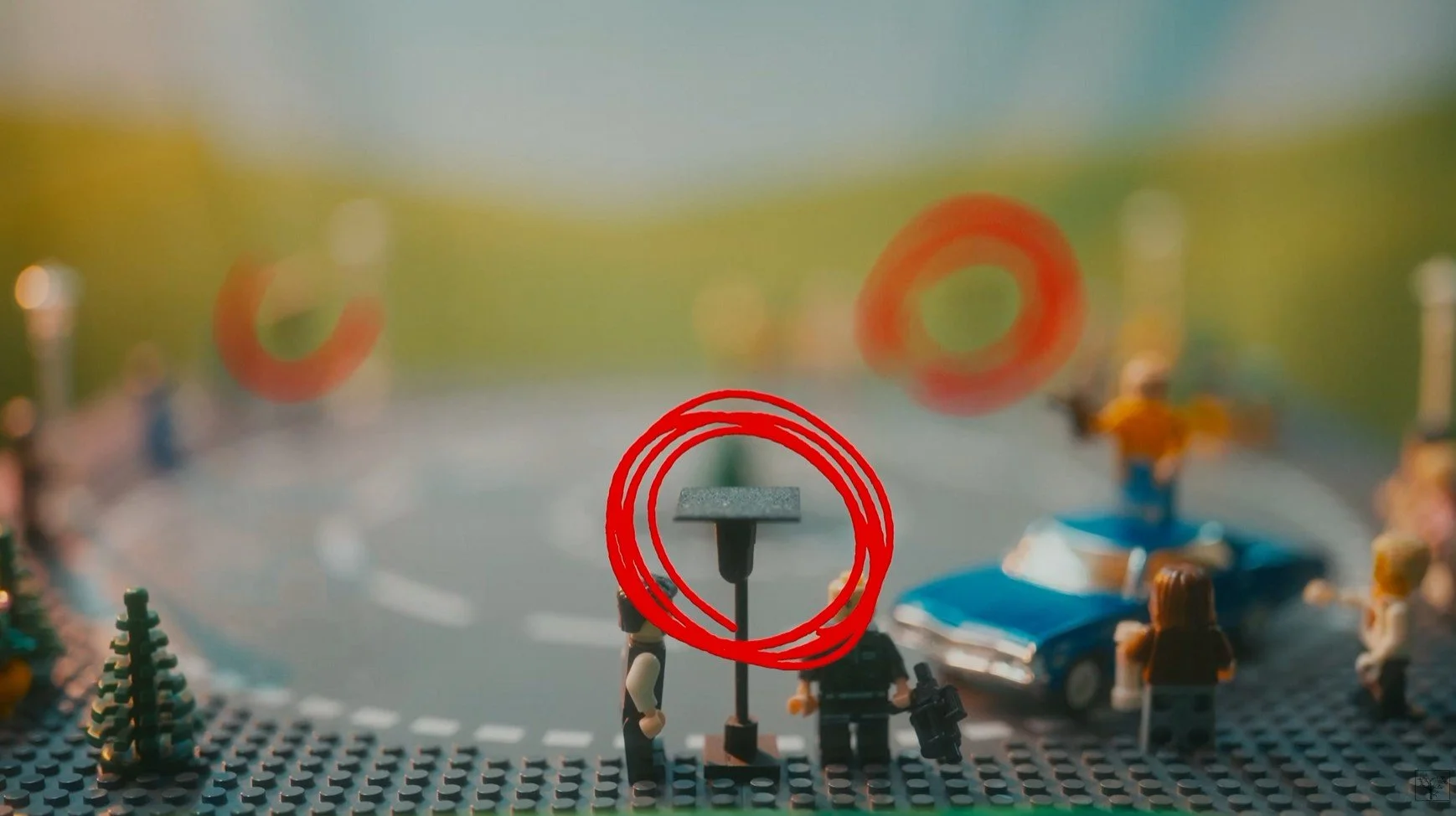
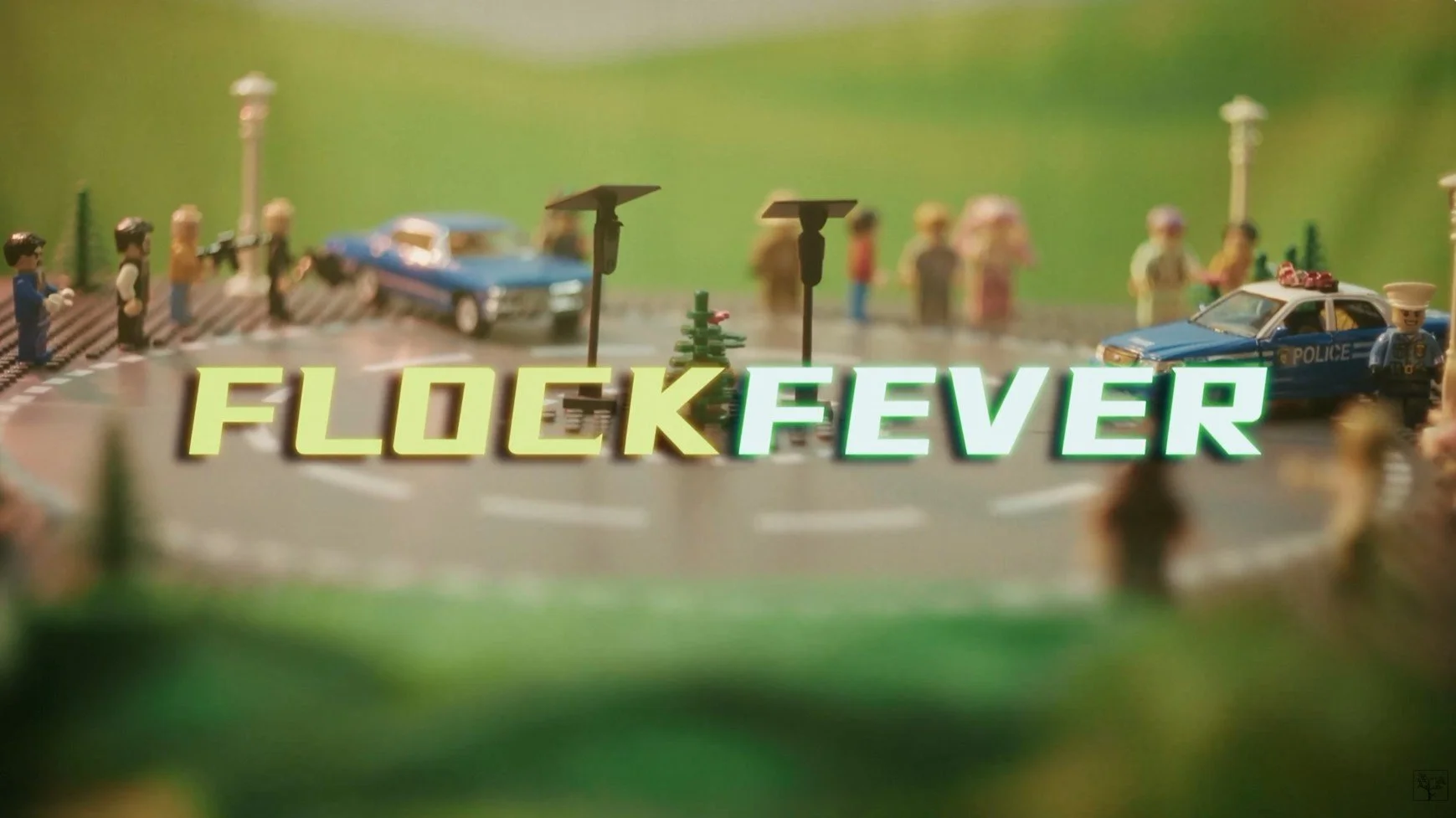
When I got the idea to use Legos as an explainer prop and title sequence, I didn’t really think it through.
First of all, at the time, nobody had made a 3D model of a Flock camera. Oddly enough, I was able to model it in Cinema 4D with no reference image. This is clearly a sign that I’ve been covering this topic for far too long.
But I underestimated how many iterations would have to be made to make a tiny Flock camera both stand on its own and connect securely to a Lego floor without breaking from the pressure. After about 8 or 9 failed attempts which now litter my lab with tiny 3D printed Flock cameras, I finally found a design that worked.
For the explainer portion, Cameron and I wanted to use a cheap robotic dolly with my beloved Sigma ART 35mm f/1.2 lens with a black mist diffusion filter. The focus and bokeh on this lens is beautiful wide open, but I can’t use it for videos much because there is no autofocus system on earth that could reliably keep it locked on a moving subject. Also, the focal length is so thin that my eye could be in focus while my nose and hair is blurred. That’s cool and all, but it’s distracting and odd looking in a video monologue.
An F/1.2 lens is also really heavy. In order to keep the motion smooth, we needed to abandon the tripods and prop the whole scene on a Christmas tree box. The lighting is a mixture of a daylight bulb in the distance and a lighting panel with an almost neon orange color bouncing off of a white diffuser. The real magic though was vape. We turned off the HVAC and clouded up that section of my garage, carefully guiding the vape clouds in the scene. It’s subtle, but it looked so pleasantly surreal after color grading.
Another fun technique, and a first for me, was tracking the focus frame by frame and using it with a lens blur effect for the red circle animations. This way, the screen elements appeared like they were part of the stop motion Lego animation.
The Usual Tricks
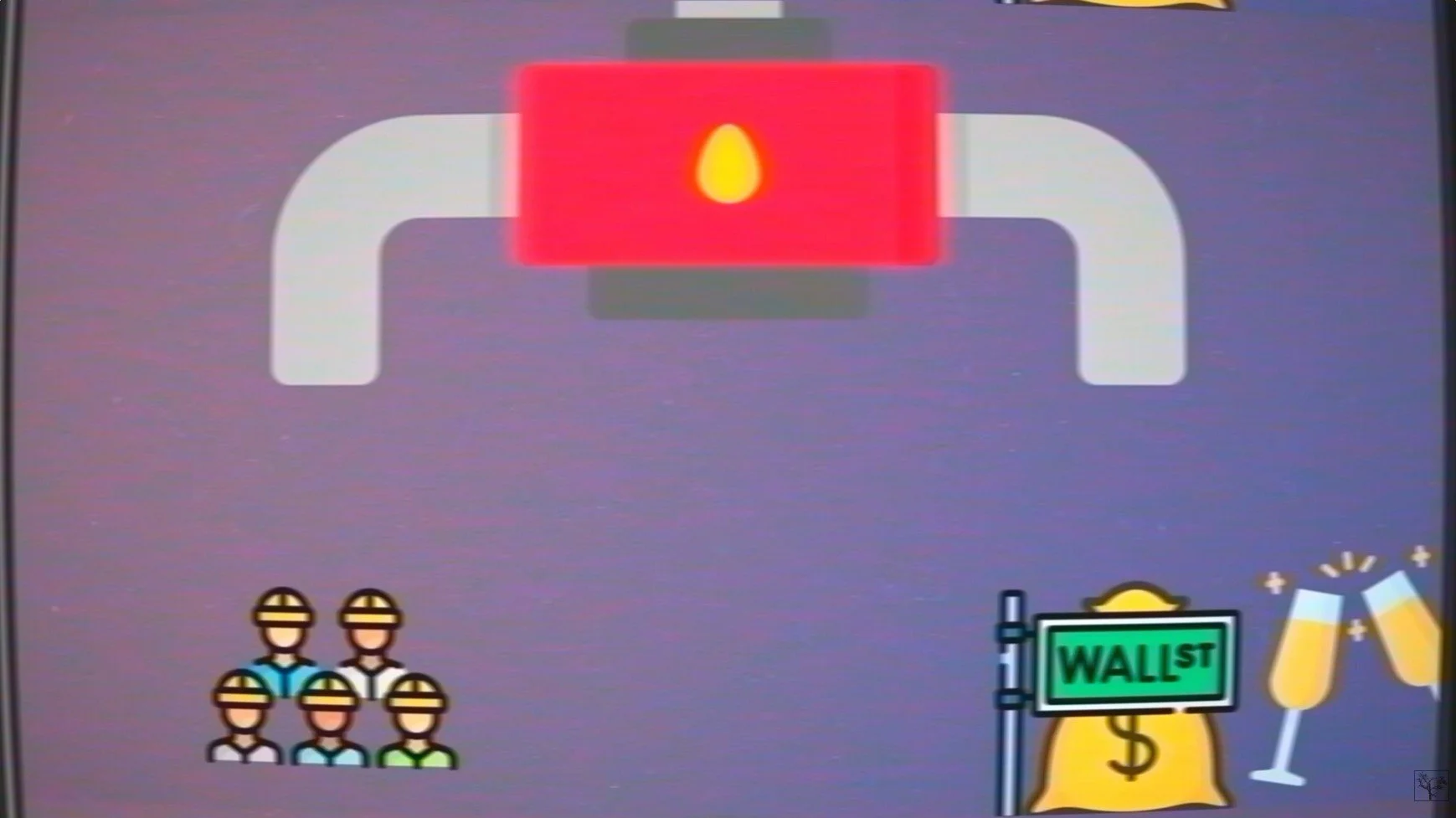
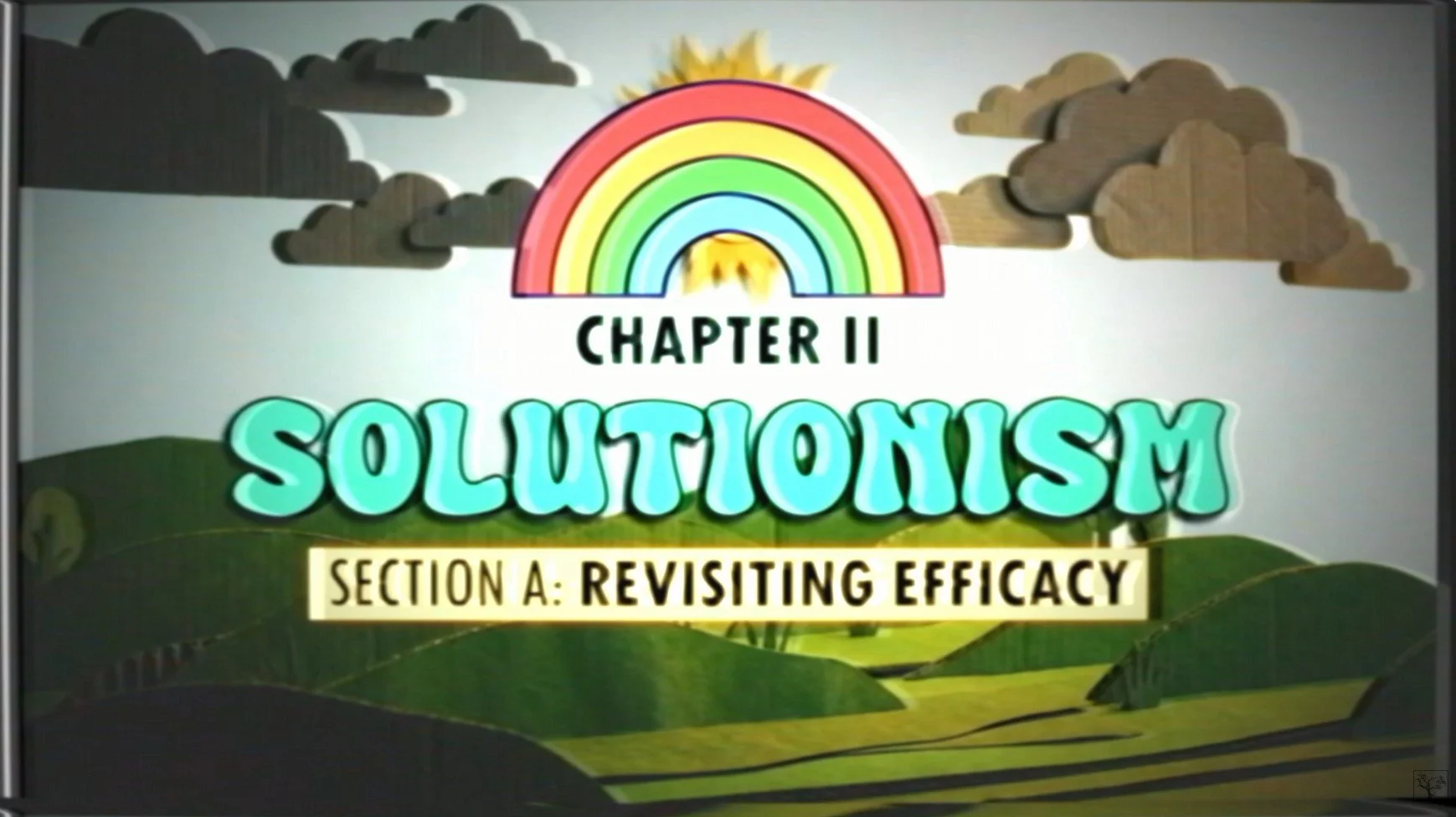
A common goal of mine in a lot of my animations is to use the exaggerated style of how I remember PBS documentaries to look when I was a child. I actually don’t allow myself to watch vintage PBS documentaries because I’m worried that the reality of how they look will somehow absorb my foggy-memory idealization of the style.
In explainers, this usually starts with a backdrop that is an animation of a piece of evenly-lit construction paper zoomed in a different location every frame. It looks like an artsy type of film grain. I obviously don’t do this for every video, but have amassed a library of colors that I pull from. I actually need to update that library as I’m getting bored of it.
Then I’ll put transparent assets, text, and images over the paper and use “Darken” or “Darker Color” modes on the layers. This gets tricky and requires a lot of complicated organization when crossing layers over one another, as they blend in an unsightly way.
Then I use a top layer that pulls from a collection of old TV screen videos with noise from VCRs, empty signals, or just plain white screens used in “Darken” mode for blending. I’ll then put in a misconfigured “lens correction” node in Davinci Resolve to give it a bit of warping the way an old TV screen would.
One Resolve technique I’m getting more and more comfortable with is bouncing the “clean” animation, then using Channel Boolean to separate it into 3 layers. One for red, green, and blue. I can blur particular colors or let them lag by a frame or 2. This creates a really appealing chromatic ghosting effect often neglected by film effect filter suites.
From there I’ll usually add on film grain and a finishing LUT.
I Wish
If AI could accomplish this to my satisfaction and personal standards, I’d be elated to spend thousands of dollars per video on compute.
Obviously I have some strong opinions about generative AI’s exploitation of creators, but as mentioned above, I’d be willing to swallow that nasty pill if it allowed me to concentrate on script writing, research, and executive production. I work so hard on little things like this that when a video like this last one is exceeding 300 hours of sitting at my desk and editing, I genuinely worry about both my mental and physical health.
When someone calls that slop, I don’t really get mad or defensive. I just feel sad that they can’t experience joy in seeing all of this hard work orchestrated in a YouTube video.
Finally, a reason I’m addressing this here is so I don’t have to have this conversation every time I publish a video. I think the AI Slop concerns initially came from a place of activism and artist-comradery. But, as demonstrated above, it’s becominging primarily distracting and toxic. A conspiratorial part of me wondered if a tiny sliver of these trillions of dollars invested in AI are being spent on troll farms to make IP-defense seem hyperbolic and annoying. Weirder things have happened.
For now I’ll just mute the comments.